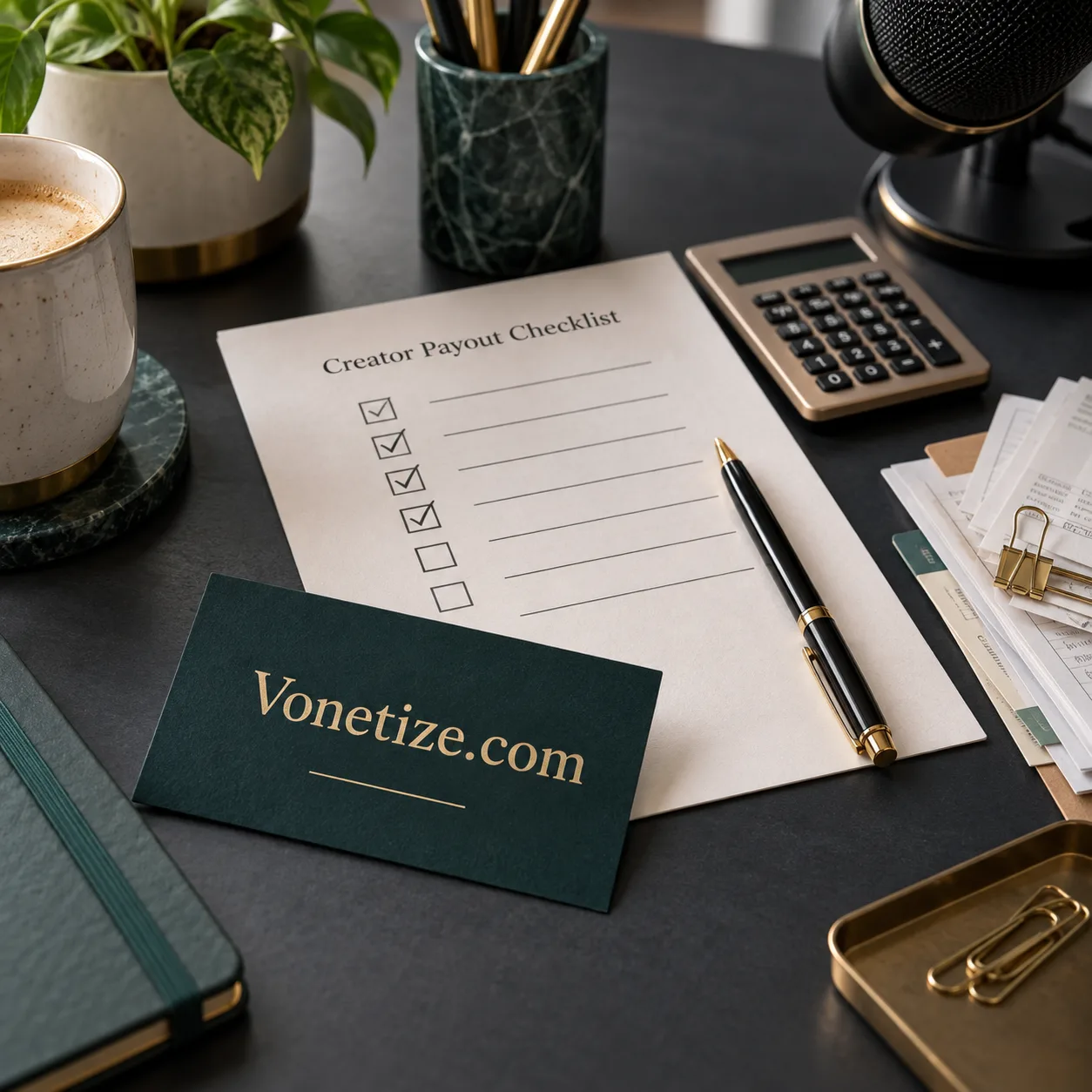
A payout feature can look complete before the operating work is ready. The interface may show a balance, a destination, and a button, while the team still disagrees about what paid means or who investigates a failed transfer. A useful launch review starts with those ordinary questions. The name and visual identity can support the experience, but they cannot answer them.
This checklist is a product and operations planning aid. It is not legal advice, a compliance determination, or a substitute for review by the relevant providers and qualified advisers. Its purpose is to make the team’s unanswered questions visible before creators rely on the experience.
1. Identify the event behind every balance
Start with the number shown to the creator. What produced it? Is it an estimate based on activity, an approved payable amount, or a record of money already sent? The interface should make that distinction clear. A single unlabeled balance can hide several states that matter to the person trying to plan around it.
Ask the team to trace one amount back to the original activity and forward through any adjustments. Include a fee, a cancellation, or another realistic change. Someone who did not build the system should be able to follow the explanation. If that person needs a private spreadsheet or a developer’s interpretation, the product has a documentation or data gap.
The result of this review should be a short definition for each displayed amount, together with its source and the event that updates it.
2. Define status words with the provider
Write down the actual sequence a payout follows in the chosen system. Give each event a user-facing label only after the team understands it. Requested, processing, sent, and received should not be used interchangeably. A provider’s response may confirm a submission without confirming final arrival.
For each status, identify the source of truth, the last update time, and the next expected event. Ask what the interface shows when that next event does not arrive. The team needs a way to distinguish “still in progress” from “no recent information” without inventing certainty.
This exercise should include support staff. They will be asked to explain the labels after launch. If their explanation differs from the product’s wording, settle the difference before the first creator needs help.
3. Test an adjustment after approval
Happy-path testing will not show whether the record remains understandable after an amount changes. Choose an illustrative case in which an earning is approved and later requires an adjustment. Work through the record from the creator’s perspective and from the platform’s perspective.
Does the original entry remain visible? Is the adjustment connected to it? Is the reason understandable? Can the creator see which statement contains the change? An unexplained lower total may be technically accurate and still create a reasonable support question.
The goal is not to expose private internal notes. It is to preserve a clear account of the financial record the creator is entitled to understand. Decide what explanation is appropriate and where it appears, then verify that the relevant source data is actually available.
4. Walk through a failed destination
A payment destination can require attention. The team should know what the creator sees, what staff can inspect, and what happens to the associated amount while the issue is unresolved. A generic error message does not establish a safe next step.
Ask whether another attempt could duplicate an earlier action. Ask who can authorize a retry and which event confirms the previous attempt’s status. These questions belong in the implementation and provider review. The user-facing flow should then reflect the agreed behavior in plain language.
Test the message with someone unfamiliar with the system. They should understand whether action is required from them and how to obtain help. Avoid a reassuring success state until the system has the evidence needed to display it.
5. Agree on dates and cutoffs
A payout date can mean the date an instruction is created, the date a provider accepts it, or an expected arrival date. Specify which one is being displayed. If the date is an estimate, label it accordingly and explain where the current status can be checked.
The team should also examine the reporting period attached to an earnings statement. A creator should be able to understand which activity is included and which activity belongs to a later period. Time zones and cutoff rules can matter to that explanation even when the interface presents a simple calendar date.
This review is about consistency, not prescribing a particular schedule. The product should describe the schedule and provider behavior it actually supports. Marketing language should be checked against those same definitions.
6. Give support a shared reference
Every payout question should be traceable to a record. A creator should not have to send screenshots of multiple pages to establish which payment they mean. A visible reference and a contextual help action can reduce the amount of information that must be repeated.
Support staff need an appropriate view of the same record, including its status history and the source of the latest update. They also need an escalation path for questions they cannot answer. The interface should not imply that staff can change or reverse an action when that authority belongs elsewhere.
Run a short rehearsal. Have one person act as a creator asking about a delayed item and another use only the planned support tools. Note every point at which they need information that is missing or inaccessible.
7. Review access and record retention
Consider who can see earnings, change a destination, export statements, or approve an administrative action. These permissions may belong to different people. A product review should make the distinction visible rather than relying on a single broad account role.
Also ask what happens when a creator leaves the platform. The team needs an intentional policy for access to historical statements and support for old transactions. The appropriate arrangements depend on the service and its obligations, so they should be reviewed with the relevant advisers and providers.
From a product perspective, the requirement is straightforward: the interface and help material should describe the actual arrangement. Do not promise indefinite access merely because a download button exists in the current design.
8. Check the public promise against the workflow
Read the headline, onboarding text, notification emails, and help article together. Do they describe the same service? A careful interface can be undermined by an email that says a transfer has arrived when the system only knows it was submitted.
Replace broad claims with the event the product can substantiate. A specific update may feel less dramatic, but it gives the creator information they can use. The same discipline applies to the name: an earnings-related brand should be paired with language that identifies the product’s actual role.
Before launch, mark three unresolved gaps from this review. Assign an owner and an observable completion condition to each. “Improve payouts” is too broad. “Define the status shown after provider acceptance and update the email to match” is a task a team can finish and verify.
The creator payouts concept shows one possible product shape for Vonetize.com. Whether that name is used or another is chosen, the experience will be judged by the clarity of its records and the quality of its response when something needs attention.